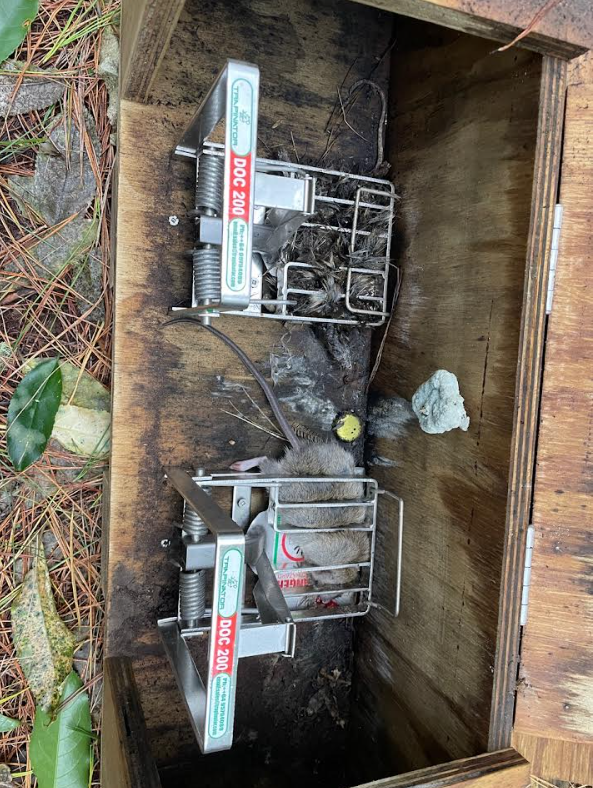
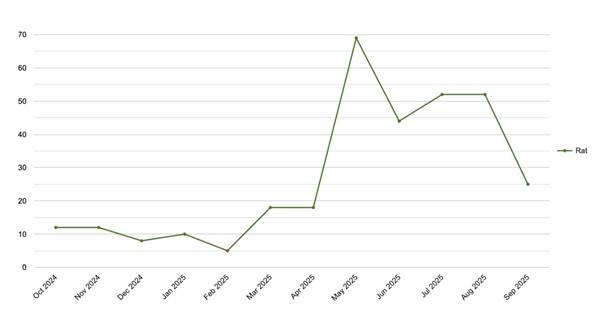
The crew spent a hugely successful week at Project Rameka, looking after the tracks and trees.
The weather was perfect and we managed to have three track work parties, and released hundreds of trees from faster growing invasive weeds.
The captions tell the story of who was there, what they did, and a few of the locals are mentioned as well.
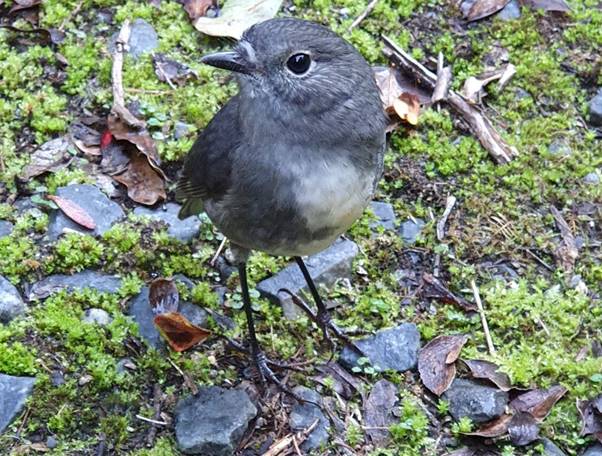
There are more birds than we’ve ever seen at Project Rameka. Robins (see above), tomtits, weka, tui, bellbirds, kererū, kea, ruru and even a kārearea (New Zealand falcon) looking for lunch. A student from Golden Bay High School has even spotted pīpipi / brown creepers at Rameka for the first time this year.
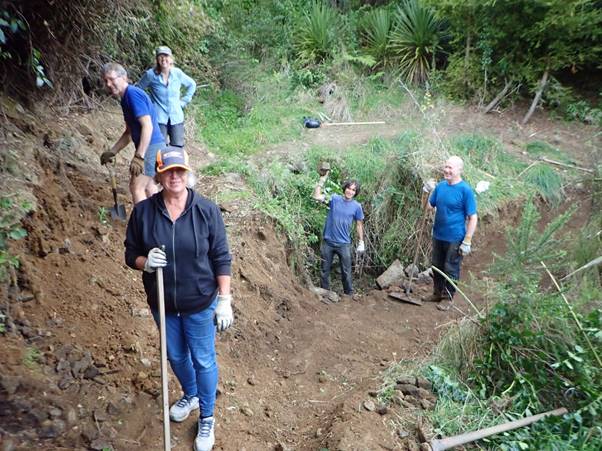
Volunteers realigning a dangerous section of Great Expectations track that was flagged in a trail audit. The diggers on this section were Bronwen Wall, Ricky and Corina Ward, Grant Fraser, Richard Mansfield and Jonathan Kennett.
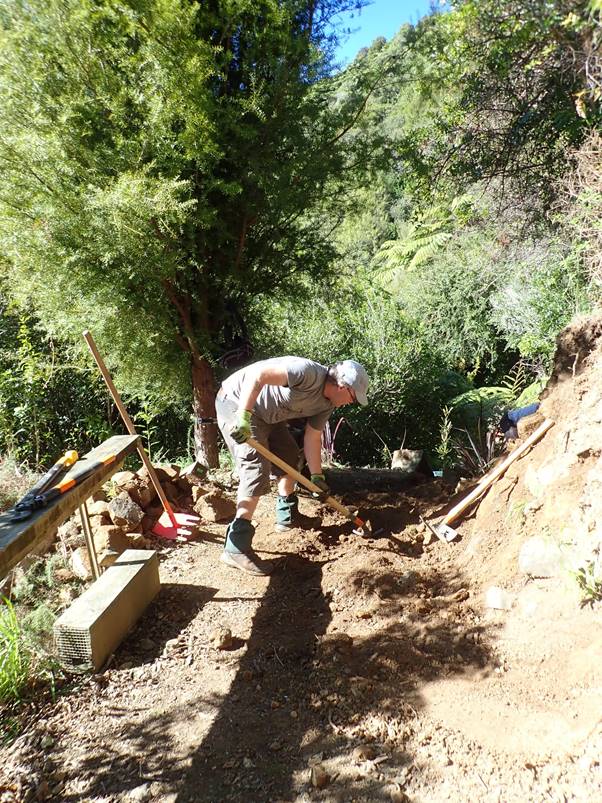
Steve, Johno and Chris from Golden Bay Mountain Bike Club did a great job or reducing the gradient of a steep section of track near the bottom of Great Expectations. This makes it easier to walk and bike.
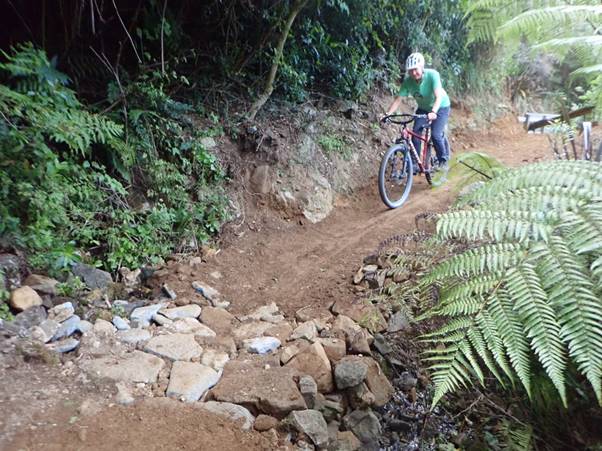
Alison Couldrey test rides the upgraded section on Great Expectations. Great rock work by Johno!
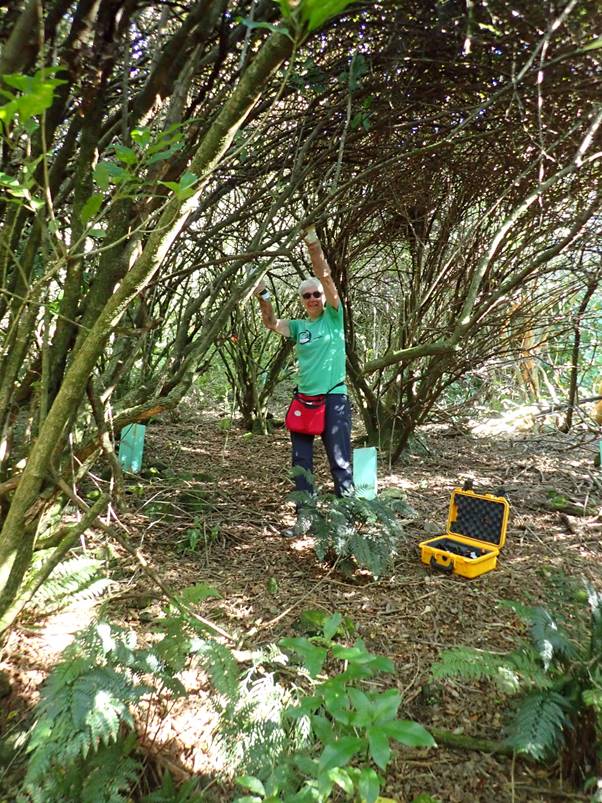
Here, Alison Couldrey is creating more light for planted trees where the barberry has created a dominant canopy and very little else is growing. Now that we have planted out all the pasture at Project Rameka, our attention is focused on dealing to the barberry, which is a tough, prickly introduced shrub that grows about 4m tall.
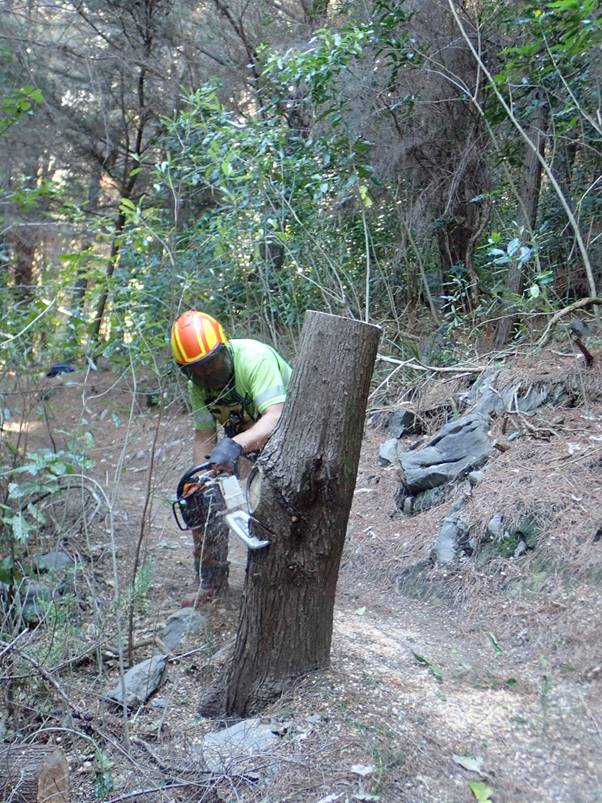
One of the responsibilities that comes with having tracks through tall trees is ensuring public safety. So, once a year, we have a forestry expert (Erik Wardrop) come and check for any dangerous trees that may fall on the track.
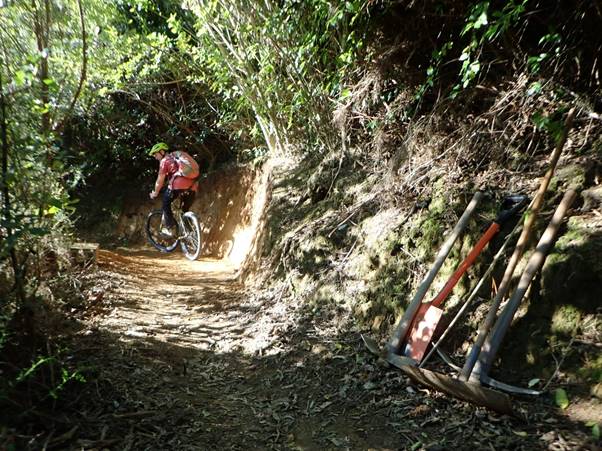
Grant from Nelson test rides switchback 7 on the lower Rameka Track. Alison, Grant and Jonathan increased the radius so that it met the New Zealand Trail Guidelines for grade 3 (intermediate). This is part of our work to improve the accessibility of this track so more people can enjoy it.
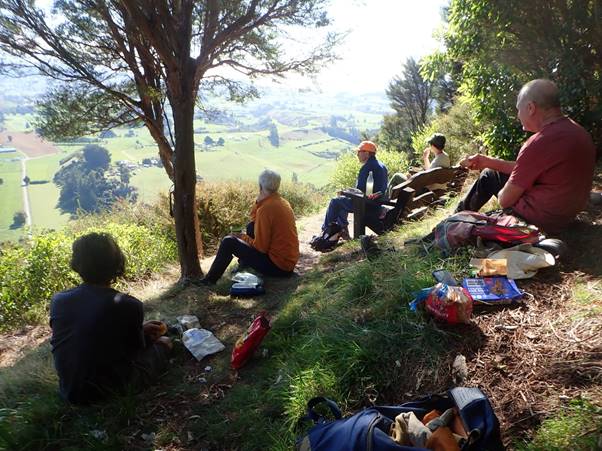
Lunch break at Martin’s Lookout, beside the lower Rameka Track.
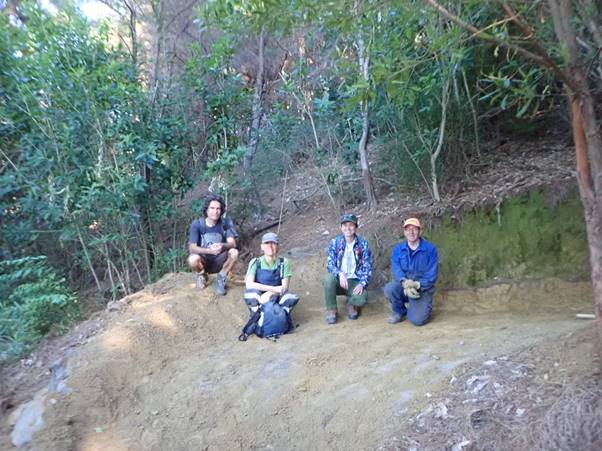
Richard Mansfield, Nicole Benkert, Robyn Glendinning and Ricky Ward, resting after upgrading switchback 9 on the lower Rameka Track.
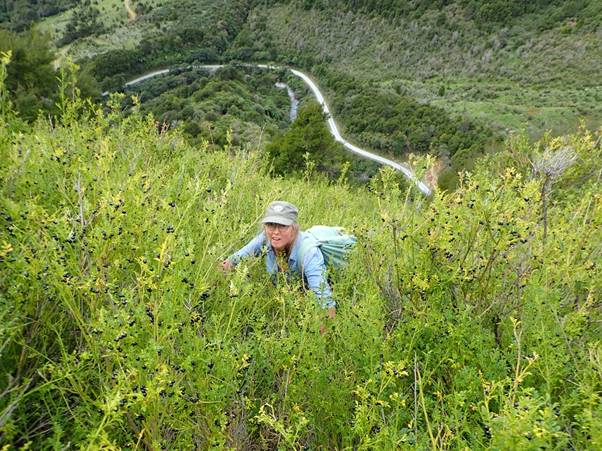
Italian jasmine has become a problem throughout Golden Bay. Unfortunately it is tolerant to both light and shade.
Here Bronwen Wall is bashing through an area that was grass 10 years ago. Hopefully, it will act as a nursery and native trees will grow up through it.
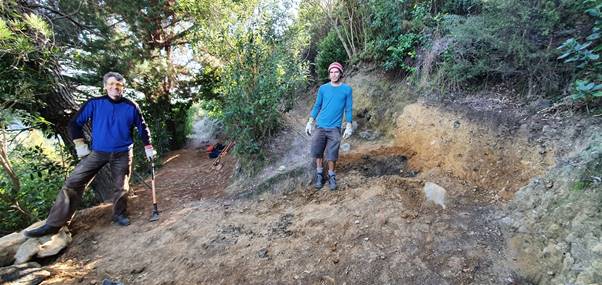
Jonathan and Richard were pretty stoked to have moved a big boulder out of switchback 8, on lower Rameka Track. Another few hours with six people, and this would become a grade 3 corner at Project Rameka.
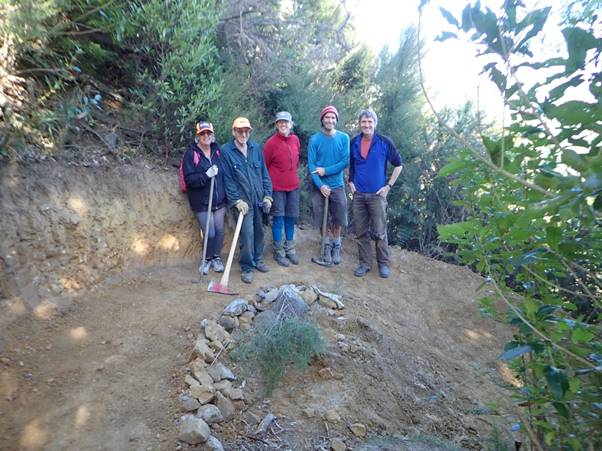
Corina, Ricky, Bronnie, Richard and Jonathan, happy with their work on switchback 8, lower Rameka Track. It is now a whole lot easier to ride and meets grade 3 standards.
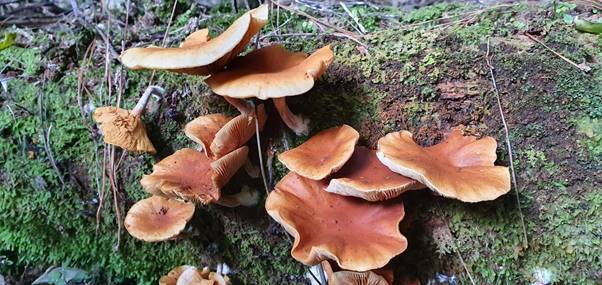
Mushrooms of an unknown species growing on the side of a pine tree that was dropped 10years ago at Rameka. We also did quite a bit of weeding around previously planted trees on this trip, following on from the great tree releasing that locals Karen LeSeuer, Kerry Gentleman and Emma Lay had done.
The trees are mostly doing very well, but we did have some losses in a small exposed area beside The Odyssey and under dense barberry. We will return to those areas with different species later this year, and will also attack the barberry!
The next big work party will be Sunday 30 August. We have 600 native trees to plant. All welcome.